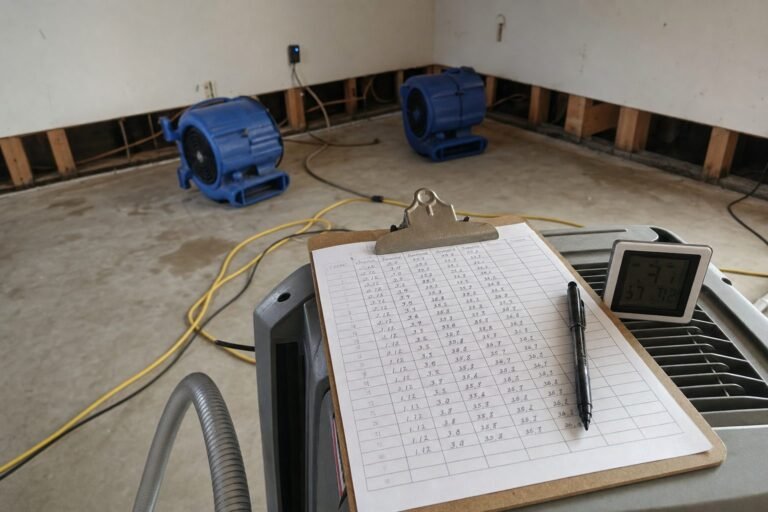
Structural Drying New Brighton MN: What Is It?
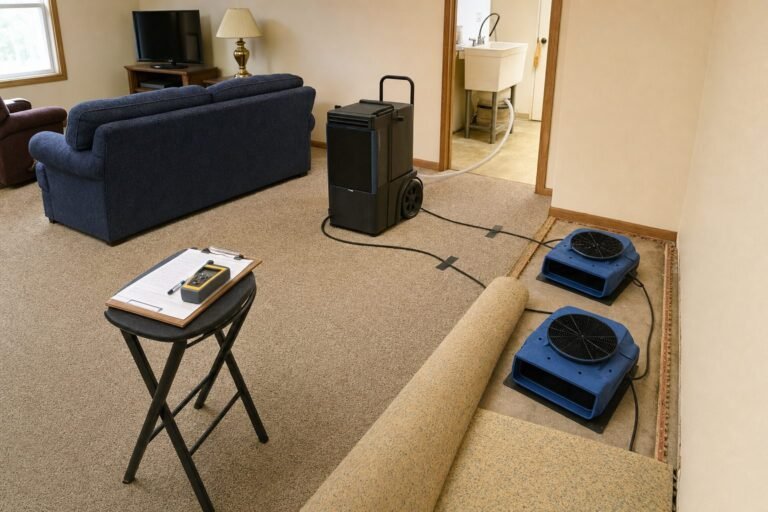
Structural drying in New Brighton, MN means drying the parts of a building that can stay wet after the visible water is gone: wall framing, subflooring, drywall, insulation, and cavities. The work is controlled evaporation, not simply making a room feel dry. Air movement, dehumidification, temperature, and moisture readings work together until affected materials return to an appropriate dry standard.
A wet floor can look normal while water remains in a wall bottom plate or beneath a finished surface. Structural drying New Brighton MN decisions should therefore begin with where moisture traveled and which materials absorbed it, not with the appearance of the room alone.
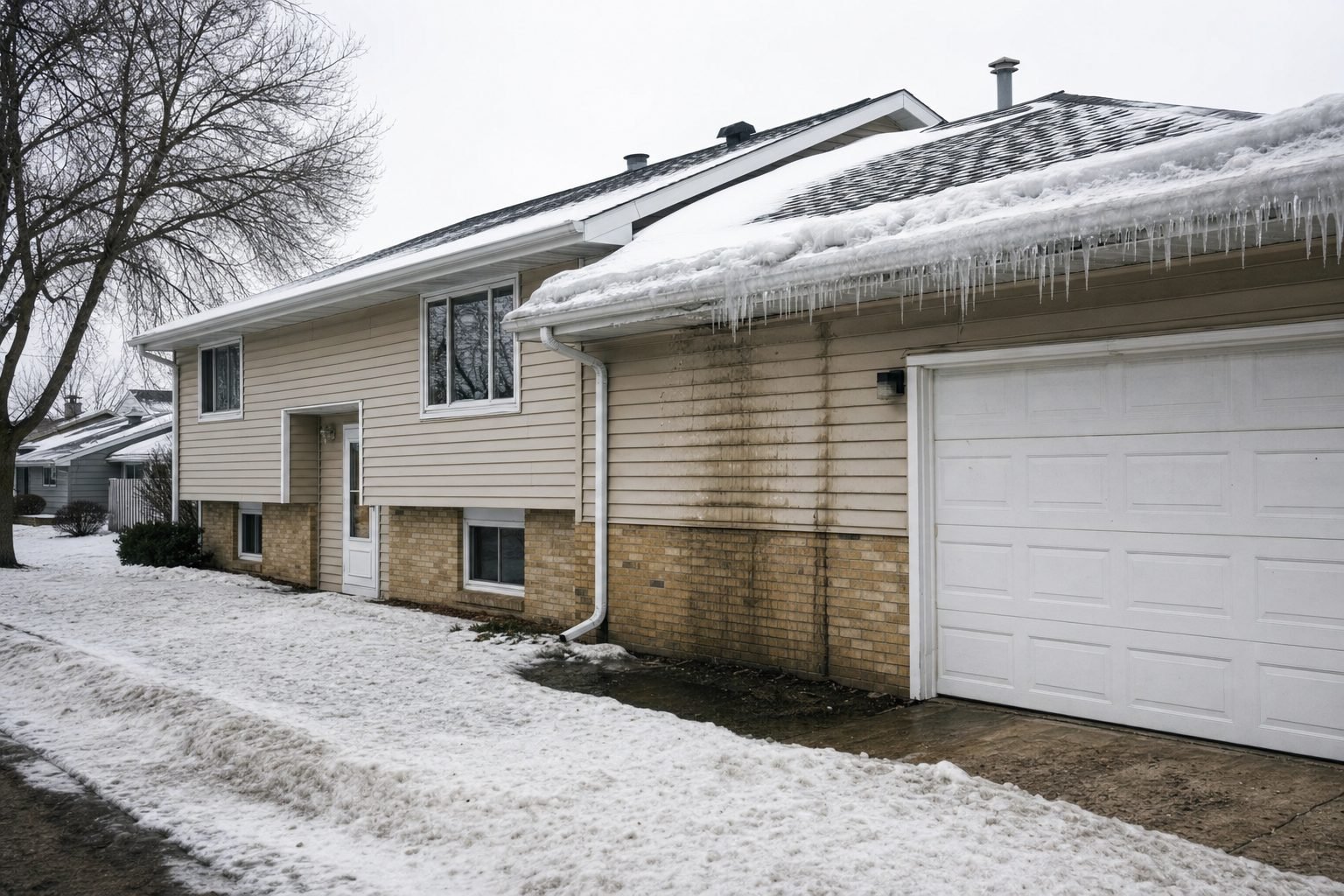
Learn the drying decisions behind the equipment
This site helps property owners decide what to check, what equipment is changing, and when a surface-level solution is not enough. Start with how structural drying works if you want a clear explanation of evaporation, vapor pressure, air movement, and humidity control.
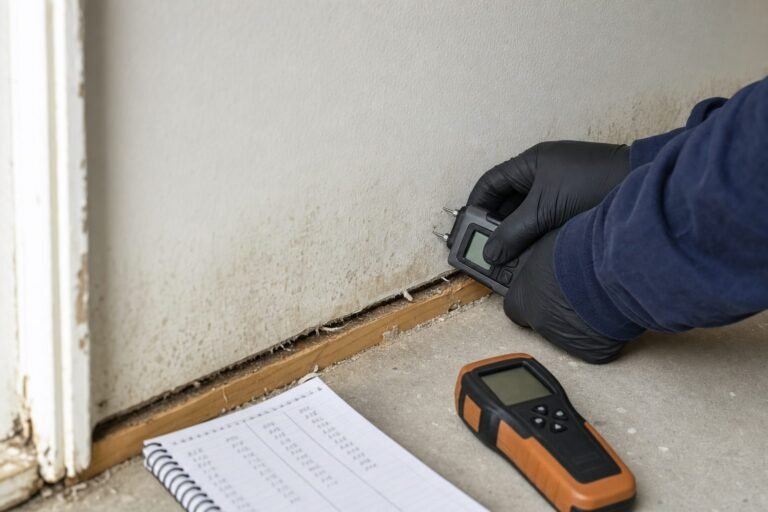
Drying is usually a measurement problem before it is an equipment problem. The guides on moisture measurement and monitoring explain how readings are compared with an unaffected control area, why a dry standard matters, and why a daily trend can be more useful than a single reading.
The decision is whether moisture is still inside the assembly
You are not choosing between “wet” and “dry” by touch. You are determining whether free water or absorbed moisture remains in materials that are hidden, slow to release water, or damaged by an overly aggressive approach. Drywall, wood, insulation, concrete, and floor coverings do not give up moisture at the same rate.
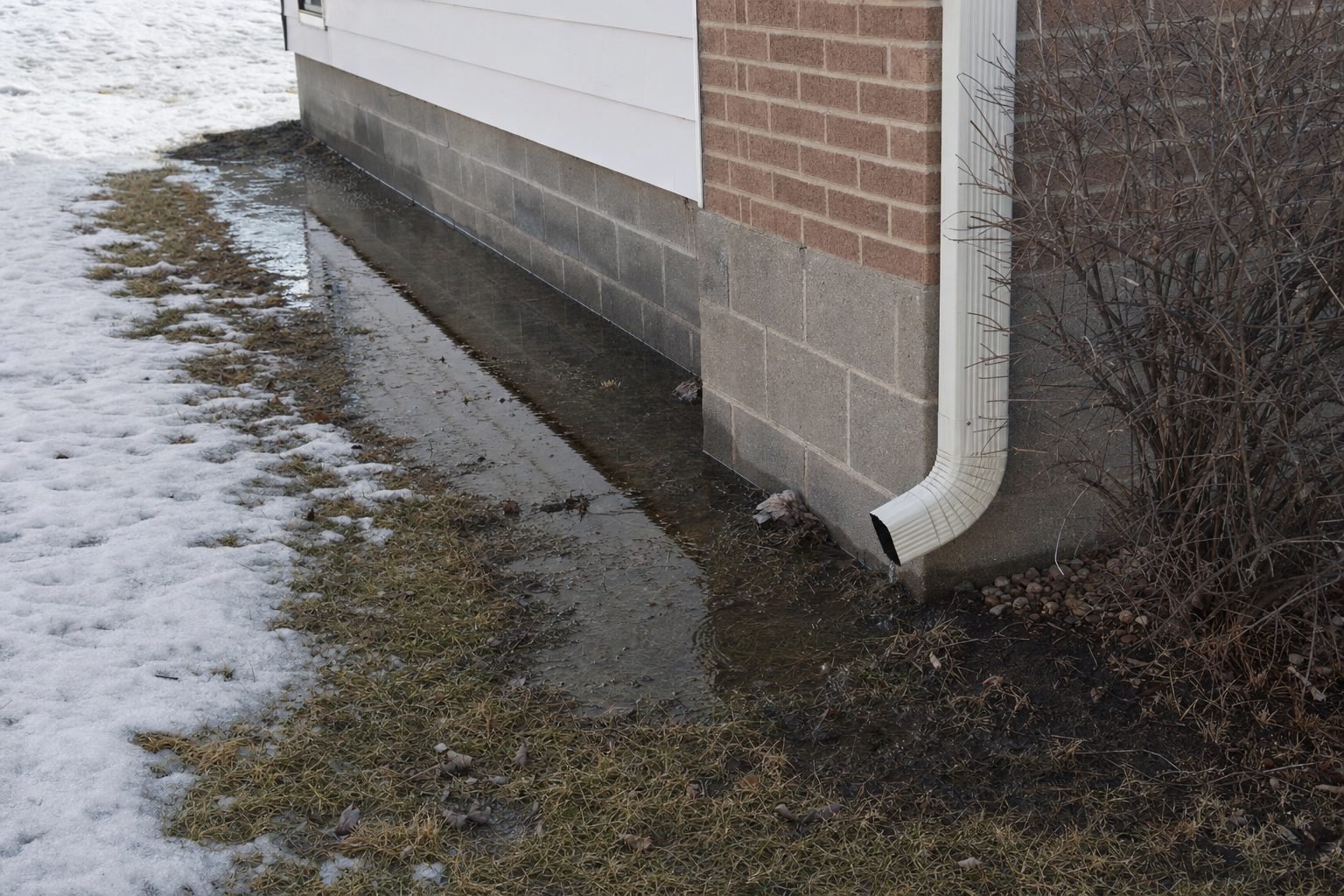
Lower indoor humidity increases the vapor-pressure difference that draws moisture into the air, while airflow removes the humid boundary layer. Heat can help evaporation, but excessive heat can cause uneven drying or material stress.
Choose the guide that matches the affected material or location
For visible wet building components, drying by material separates the decisions for absorptive finishes, framing, subfloors, hardwood, and insulation. It helps you recognize when the material itself can be monitored and dried versus when its construction or condition calls for a closer assessment.
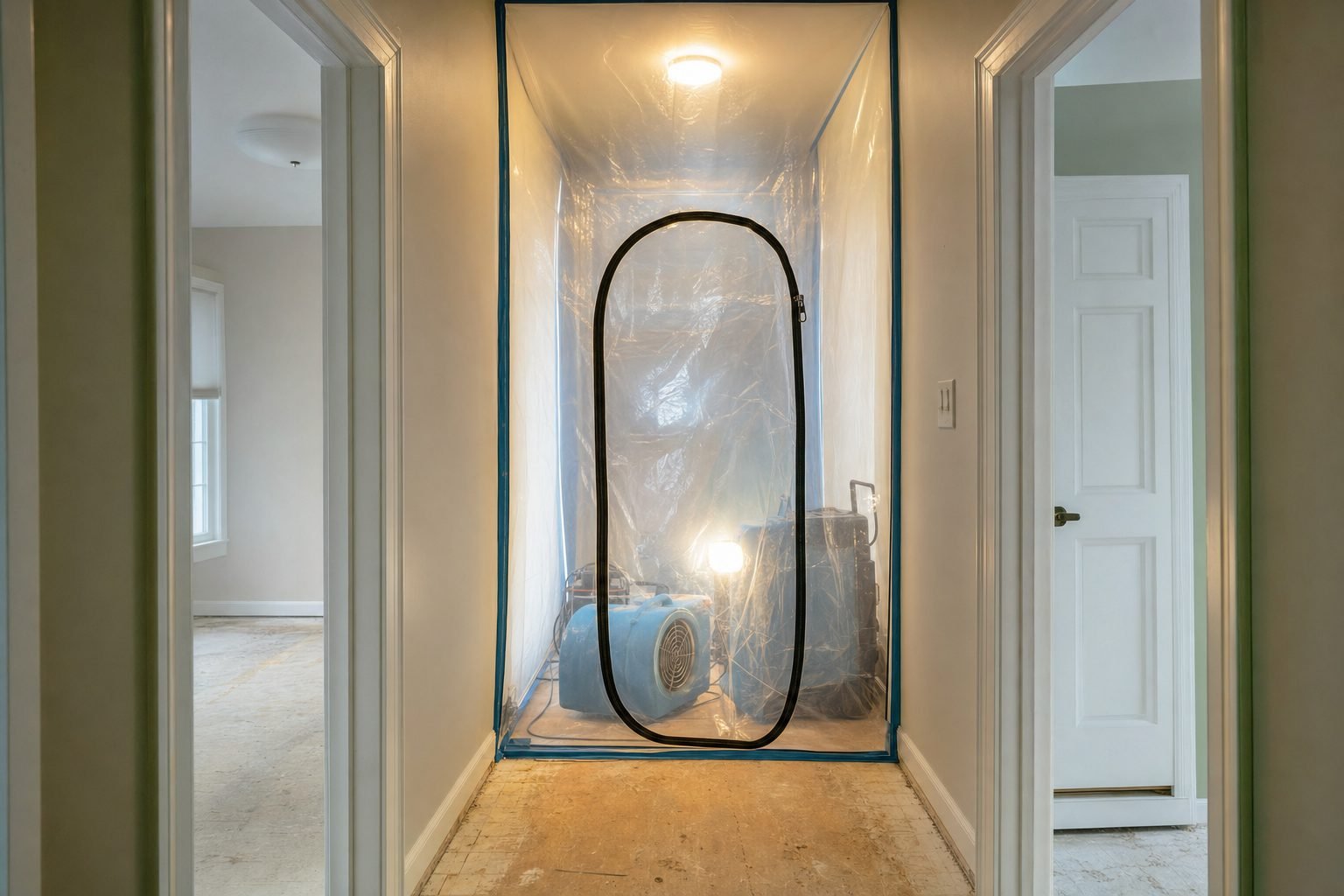
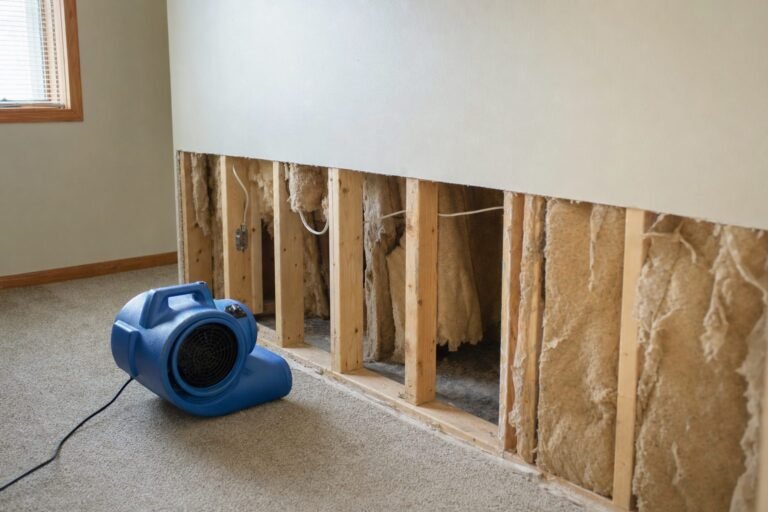
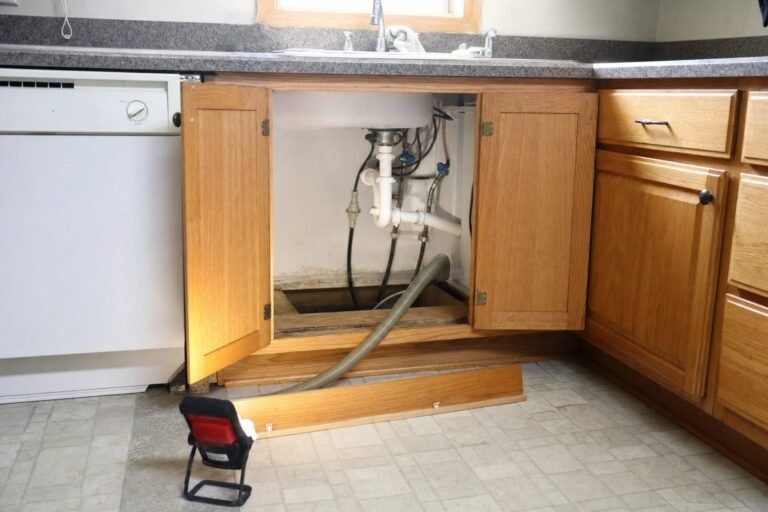
For water behind a finish, under a floor, or in a concealed void, see difficult drying situations. These locations often need a moisture map and a plan for access because the exposed room air does not necessarily reach the wet part of the assembly.
For planning questions, timeline, cost, and outcomes explains how the water source, affected materials, access, starting moisture, and drying conditions change duration and scope.
When more reading is not the next step
Request an assessment when water has entered wall cavities, reached insulation or subflooring, traveled beneath hard flooring, or affected a basement with finished surfaces. The same applies when moisture readings are not trending down, odors persist after visible drying, or the source of water is uncertain. A dry-looking room is not a reliable endpoint without a comparison to dry materials nearby.
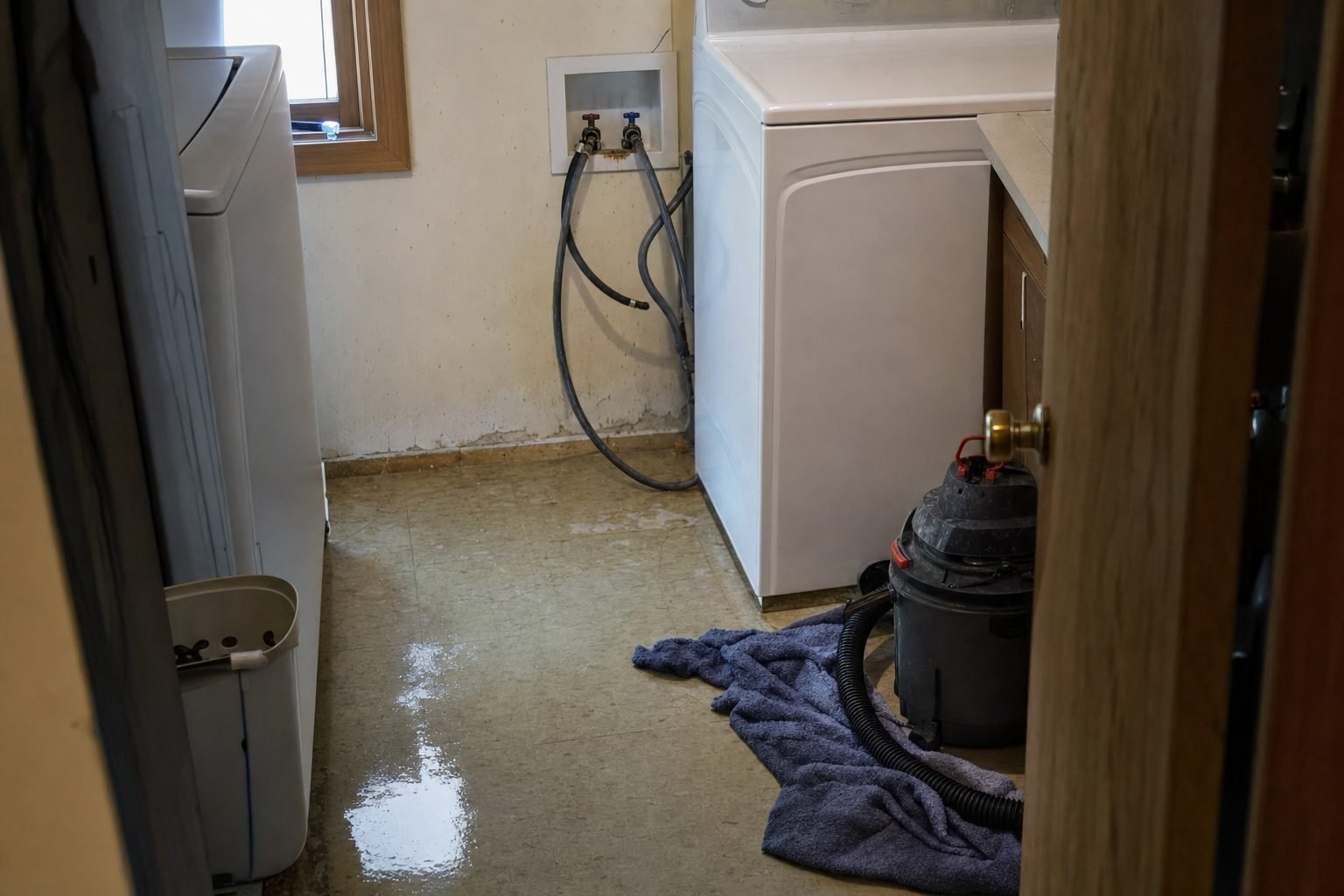
Do not operate electrical equipment in standing water or open building assemblies before the water source is controlled and the area can be handled safely.
Related questions
Why does a room feel dry while materials still read wet?
Indoor air can become comfortable well before bound water has moved out of wood, gypsum, or other absorptive materials. Surface conditions change first. Moisture meters and comparisons with an unaffected area help distinguish a dry surface from a dry assembly.
Does cold Minnesota weather make indoor drying easier?
Cold-season outdoor air can be low in humidity, but indoor drying still depends on the actual air conditions, building enclosure, and controlled dehumidification. Opening a building to outdoor air can also lower temperatures and reduce evaporation. Conditions should be measured rather than assumed.
What should be documented during drying?
Useful records include affected locations, material readings, temperature and relative humidity, equipment changes, and the comparison readings used for the dry standard. See the monitoring guide for the reason each data point matters.
If you need to move from general guidance to an on-site moisture assessment, request structural drying service and describe the affected area, material, and whether the water source has stopped.