Drying Wall Cavities and Hidden Moisture: Finding the Real Extent
Drying wall cavities and hidden moisture requires finding where water traveled, creating enough access to evaluate the assembly, and controlling conditions without assuming a visible surface tells the whole story. Cabinets, tile, crawl spaces, concrete, and closed walls can hold moisture where ordinary room airflow cannot reach.
This hub is for situations where the wet area is partly concealed or difficult to test. The New Brighton structural drying guide explains the overall drying method; the pages here focus on locations where access, moisture migration, and verification make the work less straightforward.
How do you dry hidden moisture inside walls and floors?
Hidden moisture is dried by first defining its likely path, then using appropriate inspection and measurements to decide whether drying can reach the affected assembly. Access may be created selectively, and the environment is controlled while readings track progress. A dry-facing surface alone cannot confirm a cavity or covered layer is dry.
Water follows gravity, capillary paths, seams, and framing. It may pass below a cabinet toe kick, along a wall plate, under a tile edge, or into an unconditioned space. The visible spill boundary is therefore a starting point, not a reliable map of the affected structure.
These situations are challenging because every opening has a repair consequence, while insufficient access can leave the drying plan blind. The goal is focused access and measurable results, not unnecessary demolition or wishful drying through an impermeable finish.
The decision you are actually making
The decision is whether the assembly can be evaluated and dried with limited access, needs a targeted opening, or contains materials that should be removed. The answer depends on the water source, the material layers, the path of water, and whether a meaningful dry standard can be measured after the drying setup is in place.
It is also a decision about risk. If moisture is trapped behind cabinetry, beneath tile, or inside a wall, waiting for a surface to look normal does not reduce uncertainty. A method that identifies where the water went is more useful than a general instruction to run fans in the room.
Five concealed or difficult locations
Cabinet bases and kitchen assemblies
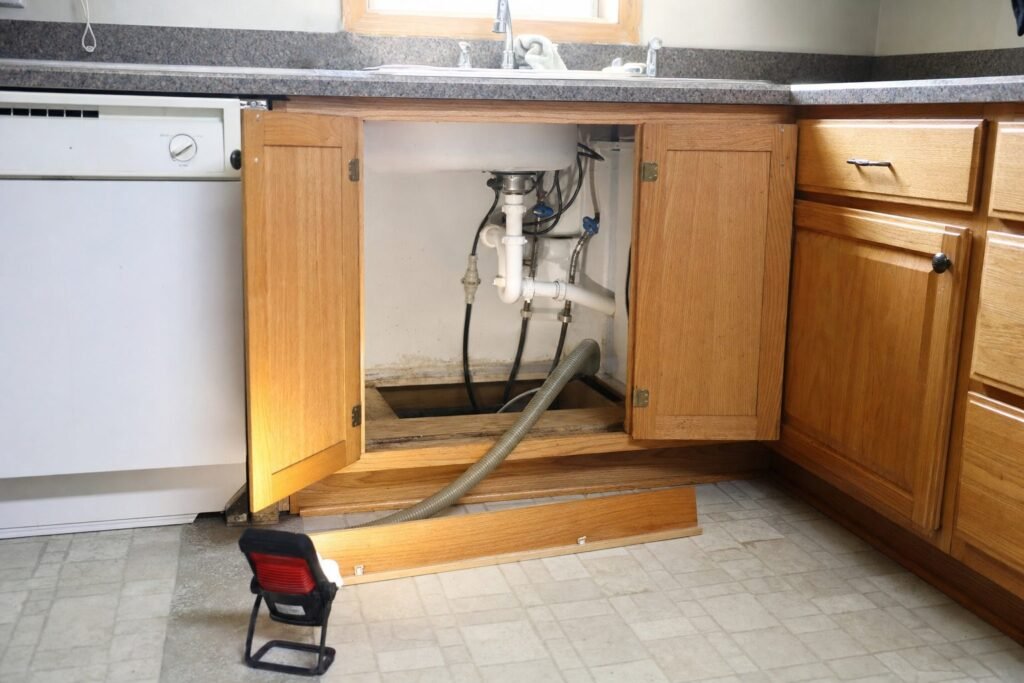
Drying behind cabinets and in kitchens explains why water under a toe kick or behind a cabinet back needs a separate evaluation. It covers access constraints, layered materials, and the difference between a dry countertop surface and the floor or wall assembly behind it.
Tile and stone floor coverings
Drying under tile and stone addresses a system of tile, grout, setting material, and subfloor. The guide frames the question as one of moisture pathways and verification, rather than promising that a finished surface will dry the layer below it.
Unconditioned crawl spaces
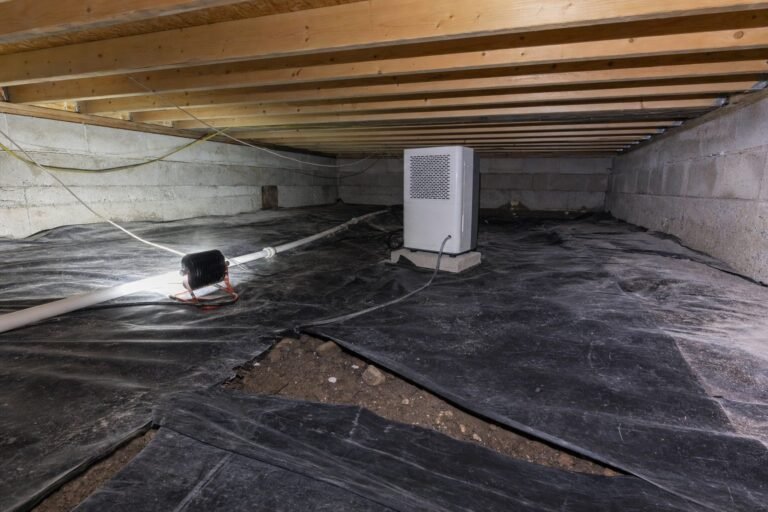
Drying a wet crawl space looks at ground moisture, limited access, insulation, and outdoor conditions. In Minnesota, seasonal ground conditions and cold surfaces can complicate the difference between an active water problem and ordinary humidity effects.
Basement walls and concrete slabs
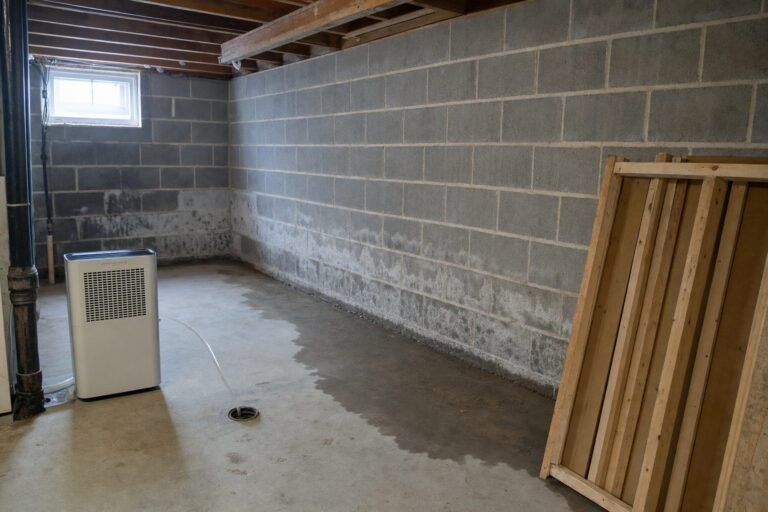
Drying basements and concrete after water explains why masonry and concrete do not behave like wood or drywall. They can retain moisture and influence indoor conditions long after visible water is gone, especially where finishes meet a foundation wall.
Closed wall cavities
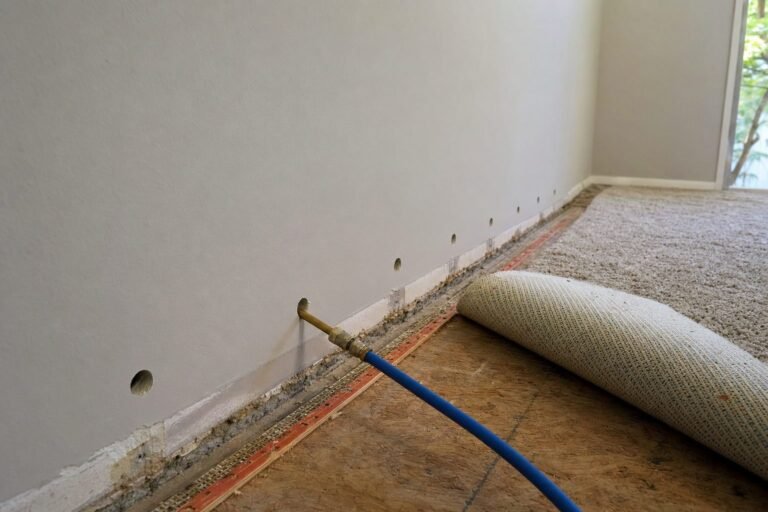
Drying inside wall cavities covers the investigation behind a hidden wall concern. It considers possible water routes, insulation, openings, and measurement—not a one-size-fits-all instruction to drill or remove material.
When more reading is not enough
Professional assessment is appropriate when water may be behind fixed cabinetry, under a finished floor, in a wall cavity, around electrical components, or in an unconditioned crawl space. It is particularly important if the water source was not clean, the source remains unresolved, or materials are swelling, separating, or producing persistent odors.
Do not seal a suspicious wall, floor edge, or cabinet base before the moisture path has been evaluated. Closing an assembly can reduce access to the places that need confirmation.
Related questions
Can hidden moisture dry without opening a wall?
Sometimes, depending on the location, materials, and ability to direct drying conditions into the affected assembly. The key issue is whether the result can be verified, not whether the wall remains visually intact.
Why is tile difficult to evaluate after a leak?
Tile is only one layer of a floor system. Moisture can move through grout lines, edges, or adjacent openings and remain in the setting layer or subfloor, where the finished surface provides limited information.
Does concrete absorb water?
Concrete is porous and can retain moisture. Its response differs from wood-based materials, so its condition and the conditions around it should be interpreted as part of the full basement or slab assembly.
When water may be in a concealed assembly, request an assessment of the affected area before closing it back up.