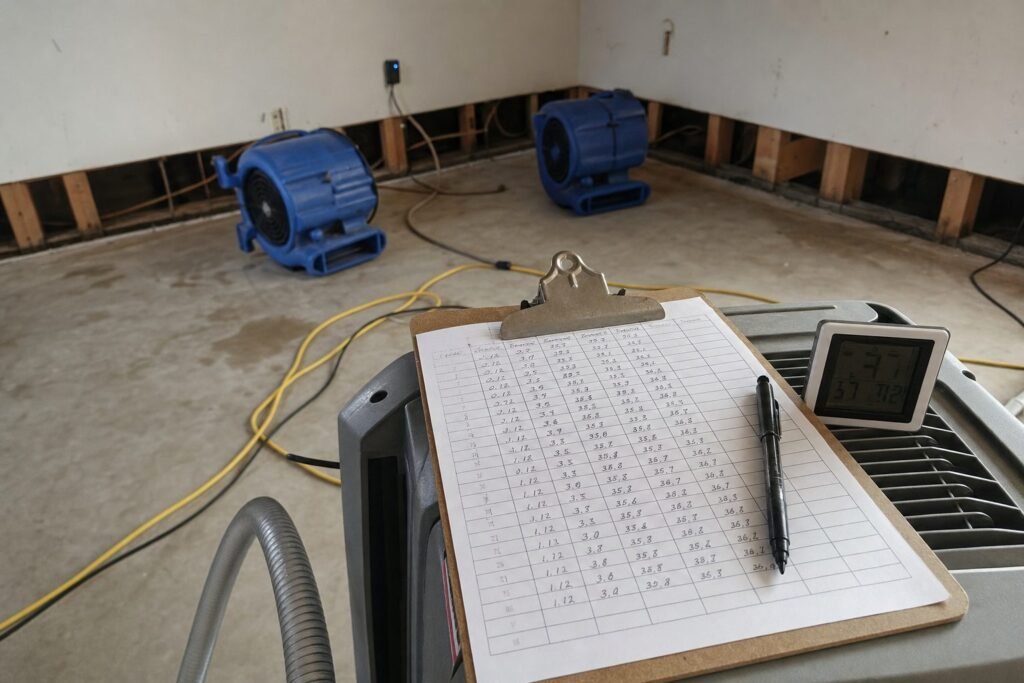
How Long Does Structural Drying Take? The Factors Behind the Answer
How long does structural drying take depends on the materials affected, how much moisture they absorbed, the water source, access to wet layers, and whether readings keep moving toward a dry standard. Many projects take several days, but a calendar estimate is less reliable than measured drying progress.
This section helps you evaluate the questions that arrive early: how long equipment may be needed, what changes the scope, whether materials can stay, and how progress is documented. The New Brighton structural drying resource explains the process itself; these guides focus on the decisions and outcomes around it.
How long does structural drying take after water damage?
Structural drying often takes several days, but the correct endpoint is based on verified material readings rather than a promised number of days. Drying can take longer when water reached dense or concealed materials, conditions cannot be controlled, or the water path requires added access. Progress should be measured against an appropriate dry reference.
The first days tell part of the story, not all of it. Readings may fall quickly in exposed finish materials while moisture remains in framing, a subfloor, insulation, or a wall cavity. The affected materials, their thickness, and the access available for evaporation influence the timeline more than the size of the room alone.
Cost and removal decisions follow the same evidence. A plan should account for the water category, materials, drying conditions, complexity of access, and the documentation required to show what happened. A number given before those factors are known is not a reliable basis for a decision.
The decision you are actually making
You are deciding whether the drying path is working well enough to continue, whether the scope needs to change, and when it is reasonable to move to repairs. That is different from choosing the shortest possible timeline or the least disruptive option in isolation. A material that cannot be verified dry is not ready simply because a target date has passed.
The most practical approach is to ask what was affected, what can be measured, what conditions are being controlled, and what result will establish completion. Those answers also clarify when keeping a material in place makes sense and when removal reduces uncertainty.
Five questions that shape the outcome
What controls the drying timeline?
How long structural drying takes explains the variables behind a drying duration, including material type, moisture load, temperature, humidity, and access. It provides a framework for interpreting a timeline without treating one average as a promise for every water event.
What affects the scope and cost?
Structural drying cost factors identifies what changes the work involved without inventing a local price. It is useful when comparing the effect of affected area, material layers, monitoring needs, containment, and difficult access on a project’s scope.
Why is a supported endpoint important?
What incomplete drying can cause explains the risks of stopping before materials reach a supported dry condition. It focuses on material movement, odor, microbial conditions, and later repairs without assuming every wet material has the same outcome.
When does removal make more sense than drying?
Drying versus removal of wet materials compares two paths that should be decided from material condition, contamination, access, and verifiability. It does not turn removal into a default or imply that drying is always the less costly option.
What documentation is useful?
Drying documentation for an insurance claim explains the role of readings, logs, photos, and scope records. It is about maintaining a clear account of conditions and progress; it does not promise coverage or claim handling outcomes.
When more reading is not enough
Professional assessment is appropriate when the water source was not clean, materials are concealed or visibly changing shape, moisture readings do not decline as expected, or the decision to remove a finish will affect a larger repair. It is also useful when you need a documented condition assessment before repairs begin.
A drying timeline is an estimate until material measurements show a stable, supportable endpoint. Do not schedule final repairs solely around the day equipment was first placed.
Related questions
Why can two similar rooms dry at different speeds?
They may contain different materials, have different water paths, or offer different access to wet layers. Indoor conditions and the amount of absorbed water also change how quickly moisture can move out of an assembly.
Does more equipment always mean faster drying?
Not necessarily. Equipment has to match the affected materials and controlled space. Excess or poorly directed airflow does not replace moisture removal, appropriate temperature, access, or measurement.
When can repairs begin after drying?
Repairs should follow confirmation that affected materials have reached the chosen dry standard and the moisture trend is stable. The right point depends on the assembly and the planned repair, not only on visible appearance.
To discuss the drying variables and documentation for your affected area, request a structural drying assessment.