Moisture Meter Testing Water Damage: What the Readings Show
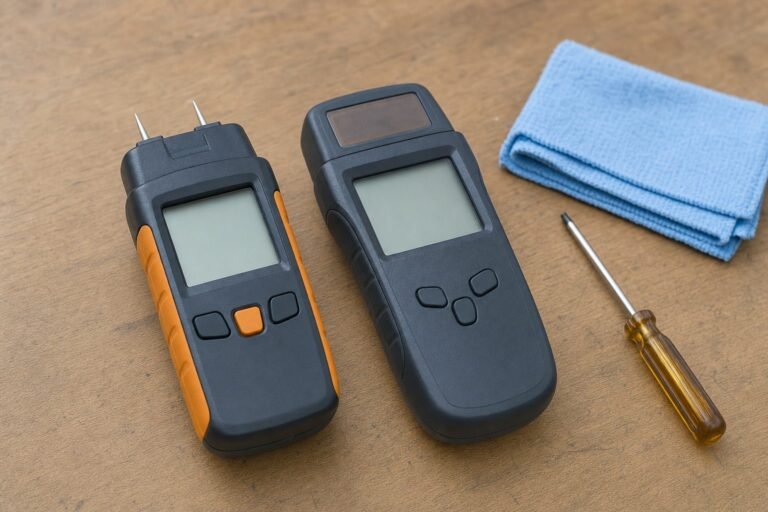
Moisture meter testing water damage helps locate affected materials, compare them with an appropriate dry reference, and confirm that drying is moving in the right direction. A useful inspection combines the right meter for the material with careful locations, documented readings, and context from the drying environment.
This hub is for anyone trying to understand why a material is tested more than once and why a room that feels dry may still be monitored. The New Brighton structural drying guide gives the overall process; these pages focus on the evidence used to make decisions inside it.
How is water damage tested with a moisture meter?
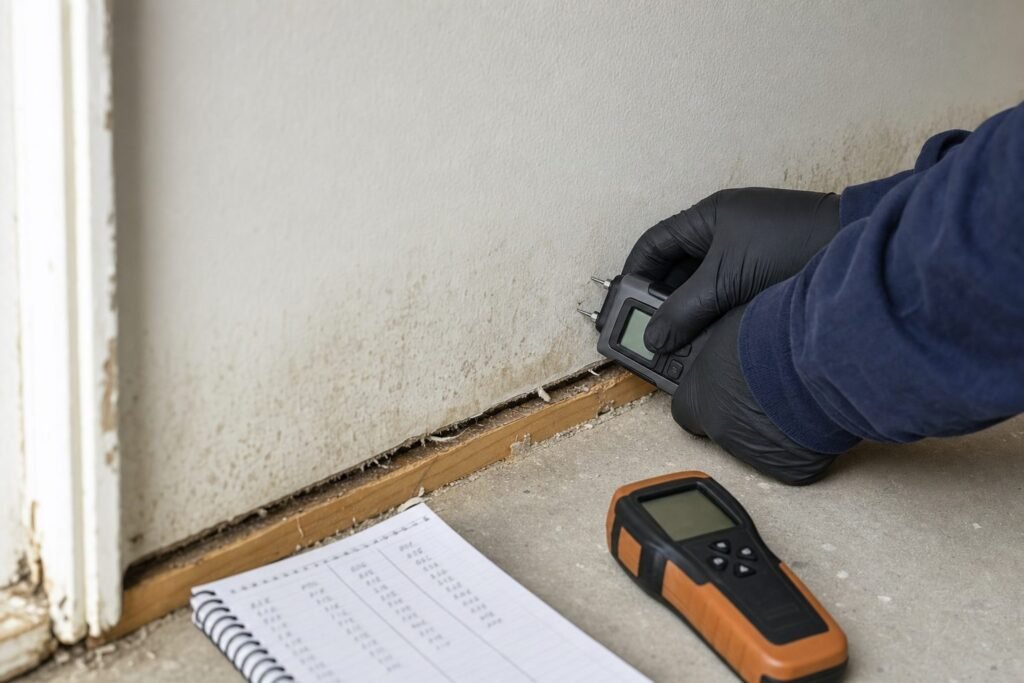
Water damage is tested by checking suspected materials at several locations, comparing affected readings with an unaffected control or dry standard, and repeating the process as conditions change. The meter type, material, depth, and measurement scale all matter, so a single reading is evidence to interpret, not a complete conclusion.
Moisture is rarely distributed evenly. A low point, wall base, doorway, or material seam may hold more water than the open area nearby. Testing maps that pattern. It also helps separate a wet assembly from one that merely has a cool surface or a temporary change in room humidity.
Monitoring has two jobs: establish the initial condition and show whether drying is progressing toward a defensible endpoint. That requires consistent locations and meaningful comparison material. A reading without a baseline, material identification, or date has limited value.
The decision you are actually making
The decision is whether the evidence supports drying in place, calls for a change in the drying setup, or shows that an assembly needs further investigation. It is not a choice between trusting a meter and trusting your senses. The practical approach uses readings alongside observation of materials, conditions, and the known water path.
Measurement also prevents premature completion. Drying should not end because the air feels comfortable or a visible surface has changed color. The relevant question is whether the affected material has returned close to the condition of comparable unaffected material, using a method suited to that material.
Five ways monitoring guides drying
Choosing the measurement method
Pin and pinless moisture meter testing explains what each method can and cannot tell you. Read it when you want to understand surface scanning, targeted probing, relative readings, and why the same tool is not ideal for every material or finish.
Setting a meaningful endpoint
How a dry standard is established covers the comparison point behind a drying decision. It is especially useful in older homes, where material composition and normal moisture content can vary from one assembly to another.
Using temperature patterns carefully
Thermal imaging for moisture investigation explains why a camera can help identify an area worth testing but does not directly measure water. Temperature differences can have several causes, so the image needs confirmation with appropriate moisture measurements.
Tracking progress from day to day
Daily monitoring and drying logs describes how repeated readings, ambient conditions, and equipment changes create a record of the drying trend. It frames documentation as a working tool, not paperwork added after the fact.
Knowing when the result is sufficient
How to tell when drying is complete brings the evidence together. It focuses on the difference between a material that seems dry and one that has met a supported endpoint based on stable, comparable readings.
When more reading is not enough
A professional assessment is appropriate when readings indicate moisture behind finished surfaces, when the water path crosses several materials, when the source was not clean, or when an instrument result conflicts with visible damage. It is also appropriate when a floor, cabinet base, or wall cavity cannot be evaluated without deciding how to access it.
Do not use one moisture reading to declare an entire room dry. Materials respond differently, and the most affected location may not be the most visible one.
Related questions
Can a pinless meter read through paint?
Many pinless meters are used to scan finished surfaces, but the result is influenced by material density, depth, and the instrument’s scale. A scan is often a way to identify locations for more targeted evaluation.
Why compare with an unaffected area?
Comparable unaffected material provides a practical reference for the building’s own normal condition. That comparison is often more meaningful than treating one published number as universal for every house and material.
Should readings be recorded during drying?
Yes. Repeated, dated readings show direction of change and help identify when conditions have stalled. They are more useful when the locations and method remain consistent.
For measured evaluation of affected materials rather than a visual guess, request a moisture assessment.