How Structural Drying Works
How structural drying works comes down to one idea: the controlled removal of moisture from wet building materials after the water source is stopped. It uses measured airflow, dehumidification, temperature management, and repeated moisture readings to move water out of assemblies and verify that materials have returned to an appropriate dry condition.
This section explains the mechanics behind the equipment you may see running after a leak, overflow, or intrusion. Start with the New Brighton structural drying resource if you need the broader picture, then use these guides when you want to understand one part of the process without guessing from the sound of a fan.
How does structural drying work after water damage?
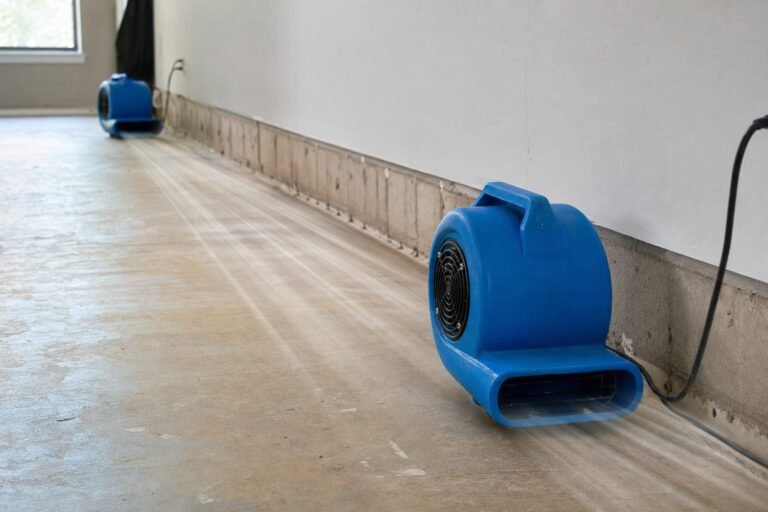
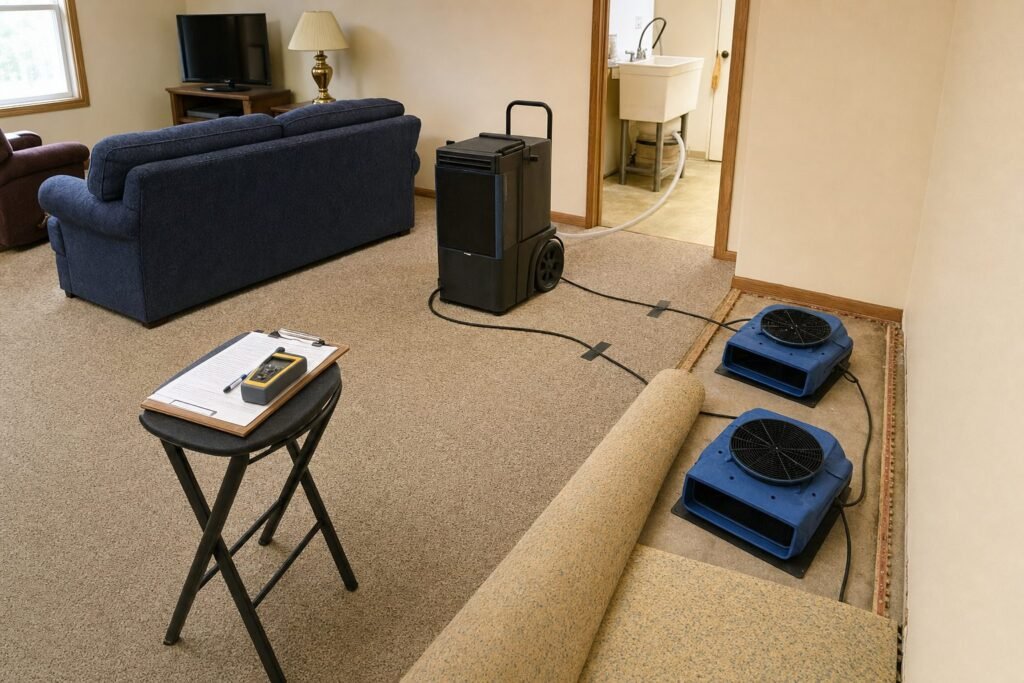
Structural drying works by creating conditions that let liquid and absorbed moisture evaporate from materials, then removing that water vapor from the air. Air movement refreshes the material surface, dehumidification lowers the air’s moisture load, and monitoring shows whether the affected assembly is actually drying rather than merely feeling dry.
Water follows paths that are not always visible. It can wet finish materials, travel along framing, collect at floor edges, or enter a cavity through a small opening. Effective drying begins with identifying the affected area and the material types, because drywall, wood, insulation, and concrete release moisture at different rates.
The process is not simply “add more fans.” Air movers can increase evaporation at a wet surface, but that moisture has to go somewhere. If the air becomes too humid, evaporation slows. Dehumidification creates the vapor-pressure difference that keeps moisture moving from the material into the air and out of the drying environment.
The decision you are actually making
The immediate decision is usually whether the affected structure can be dried in place, needs selective opening for access, or should be removed because its condition or contamination makes drying a poor choice. That decision depends on the water source, how long materials stayed wet, what is hidden, and whether readings can be taken from meaningful locations.
A surface can look normal while the assembly behind it remains wet. Conversely, opening every material before understanding the moisture pattern can create avoidable repairs. The useful question is not whether equipment is running; it is whether the drying plan has access, a measurable target, and a way to show progress.
Five parts of the drying process
What the term covers
What structural drying is explains the distinction between drying a building assembly and simply removing standing water. It is the right starting point when you need to understand why moisture can remain after extraction and why conditions are managed rather than left to ordinary room air.
Why air movement matters
What air movers do during drying focuses on boundary-layer air at the material surface. The guide is useful if you are deciding whether airflow placement is purposeful, but it does not replace measurement of what is happening inside the material.
Why moisture must leave the air
How dehumidification supports water-damage drying explains the other half of evaporation: collecting water vapor so the air can continue accepting moisture. It covers the reasoning without turning a room’s relative humidity into a stand-alone pass-or-fail number.
How conditions change drying speed
Temperature, humidity, and drying speed looks at how heat and humidity interact. Minnesota conditions can shift sharply between a dry winter day and a humid summer period, so controlled indoor conditions matter more than a single outdoor-weather observation.
When the affected area needs separation
Containment and drying chambers explains why a smaller controlled area is sometimes built around a wet assembly. It is relevant when drying conditions need to be concentrated or when air movement should be kept out of the rest of the building.
When more reading is not enough
Professional assessment is sensible when water may be inside a wall, below a finished floor, behind cabinets, or in insulation; when the water source was not clean; or when materials are swelling, separating, or visibly deteriorating. It is also appropriate when the source is still active or the affected area cannot be safely accessed and measured.
Do not rely on touch alone to judge a wet building material. Surface dryness and a normal-looking finish do not establish a dry condition inside a cavity or below a covering.
Related questions
Why does drying equipment run after water is extracted?
Extraction removes liquid water that can be reached directly. Equipment used afterward manages evaporation and air moisture so water held in porous materials can continue moving toward a dry condition.
Can open windows dry a water-damaged room?
Outdoor air is not a controlled drying system. Its moisture content changes with weather, and open windows can add humid air during a Minnesota summer period. Readings from the material and drying air are more useful than assumptions about ventilation.
Does structural drying always require opening walls?
No. The need for access depends on the moisture path, materials, and ability to verify conditions. When a wall cavity is implicated, the access decision should follow the evidence rather than a blanket rule.
If you need a drying plan based on the affected materials and measurable conditions, request a structural drying assessment.