Drying Wet Building Materials: Why the Material Changes the Plan
Drying wet building materials means matching the drying method and endpoint to the material that absorbed the water. Drywall, framing, subfloor, hardwood, and insulation hold and release moisture differently, so a sound plan considers the water source, exposure time, access, condition, and measurable dry target.
This section helps you understand why one affected area may dry in place while another needs selective removal or closer monitoring. For the larger process, visit the New Brighton structural drying resource; use the guides below when the question is about a particular building material.
Can wet building materials be dried in place?
Some wet building materials can be dried in place when their condition, water source, access, and moisture response support it. Others lose structural integrity, trap contamination, or cannot be evaluated well enough behind finishes. The decision is material-specific and should be supported by readings, not by appearance alone.
Porous materials absorb water into their structure. Nonporous and semi-porous surfaces can still hide moisture underneath or at seams. Even materials that seem similar behave differently: dimensional lumber releases moisture along grain patterns, while drywall can lose strength once its gypsum core has been saturated.
The goal is not to preserve every material at any cost. It is to make a defensible choice between drying, selective opening, and removal before hidden moisture or material damage creates a larger repair scope.
The decision you are actually making
You are deciding whether the material remains serviceable after the type and duration of water exposure, and whether it can be dried to an appropriate reference condition. That means distinguishing free water from moisture bound within a material, and separating a dry-looking surface from the condition deeper in the assembly.
Timing matters, but it is not the only factor. Clean water, a brief exposure, accessible materials, and a clear moisture trend can support a different decision than contaminated water, swelling finishes, delamination, or insulation that has absorbed and held moisture.
How common materials are evaluated
Drywall and its paper facing
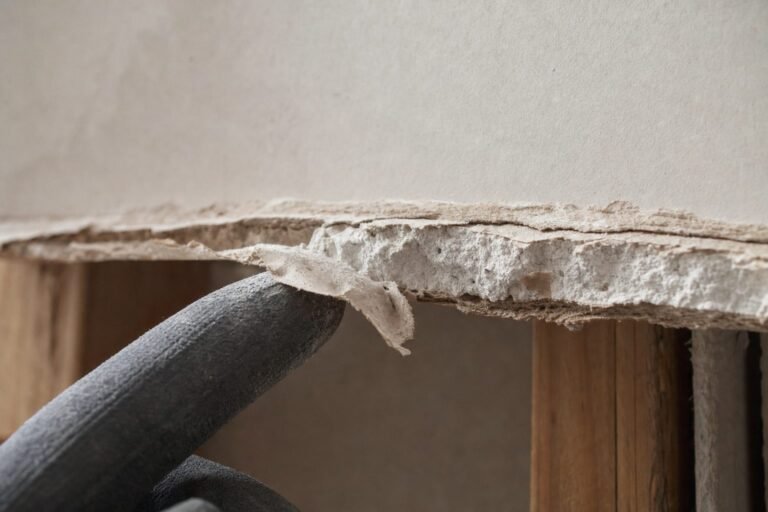
Drying wet drywall explains the signs that drywall may remain stable enough to dry and the conditions that make removal more sensible. It covers absorption, swelling, access at the wall base, and the need to compare readings with unaffected board rather than relying on surface feel.
Framing and wall studs
Drying framing and wall studs focuses on lumber within an opened or accessible assembly. Wood is hygroscopic, so moisture movement and dry targets must be interpreted in relation to comparable framing and the indoor environment.
Subfloor beneath finished flooring
Drying a wet subfloor addresses a difficult location: a structural layer that can be covered by flooring yet still hold moisture. The guide looks at access, material type, and why a surface covering can slow or obscure drying.
Hardwood floor systems
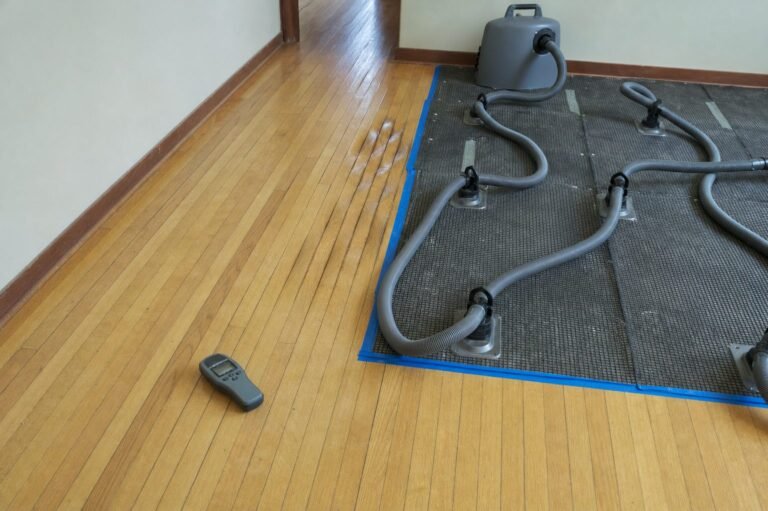
Whether wet hardwood floors can be saved explains the questions behind cupping, buckling, and drying decisions. It does not assume that every wood floor has the same construction or recovery path; the species, installation, water path, and moisture gradient matter.
Insulation in walls and ceilings
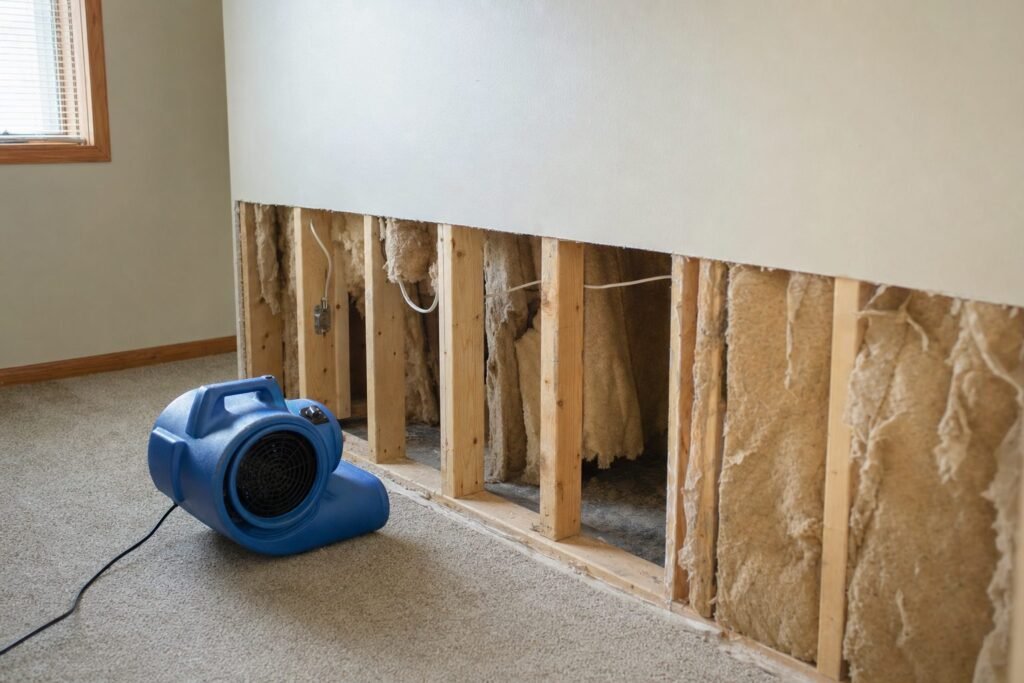
When wet insulation can be dried or should be removed covers the limits of drying a concealed, absorbent material. The answer changes with insulation type, water quality, compression, access, and whether the cavity can be verified afterward.
When more reading is not enough
Bring in a professional when material is swelling, delaminating, buckling, or shedding strength; when water reached insulation or a concealed subfloor; when the source was not clean; or when the moisture path cannot be traced. These are situations where opening or testing decisions have consequences beyond ordinary household drying.
Do not trap a wet material beneath new flooring, paint, trim, or a cabinet toe kick. Covering a moisture problem can slow further drying and make later investigation more disruptive.
Related questions
Does a material have to feel wet to need drying?
No. Many building materials can hold moisture below the surface or behind a finish while the exposed face feels dry. Instrument readings and comparison locations help determine the actual condition.
Why not use the same drying approach for every material?
Materials differ in porosity, thickness, composition, and sensitivity to water. The same room conditions can produce very different drying rates and failure risks in drywall, lumber, insulation, and finished flooring.
Can a damaged finish hide a dry structural layer?
Yes. A finish may be visibly damaged while the material behind it has a different moisture condition. Each layer should be evaluated for its own condition and role in the assembly.
To make a material-specific decision before repairs cover the affected area, request a structural drying assessment.